Copyright protected © 1968-2025, Fibonacci Art Gallery or its affiliates, All rights reserved YASAMI 1968-2027
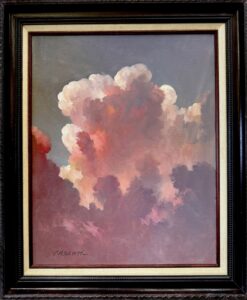
Masoud Yasami’s paintings can be seen as a contemporary exploration of themes reminiscent of the dramatic realism found in Caravaggio’s work. Like Caravaggio, Yasami employs a mastery of light and shadow to create depth and emotional intensity in his art. His intuitive approach invites viewers to engage with the nature of reality itself, challenging their perceptions and inviting them to look beyond the surface.
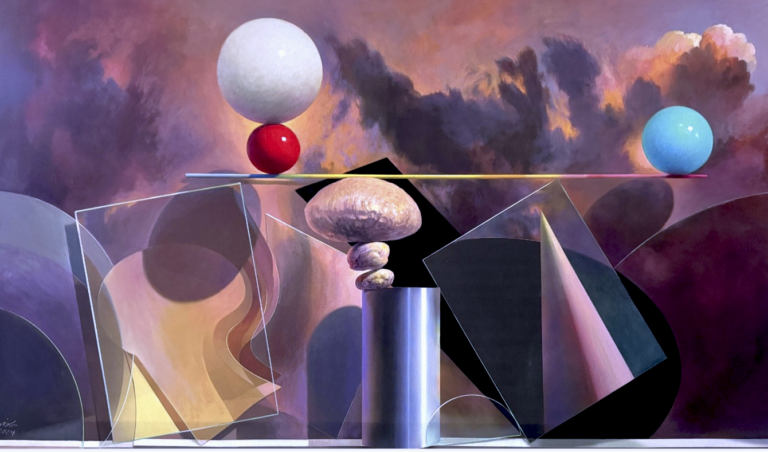
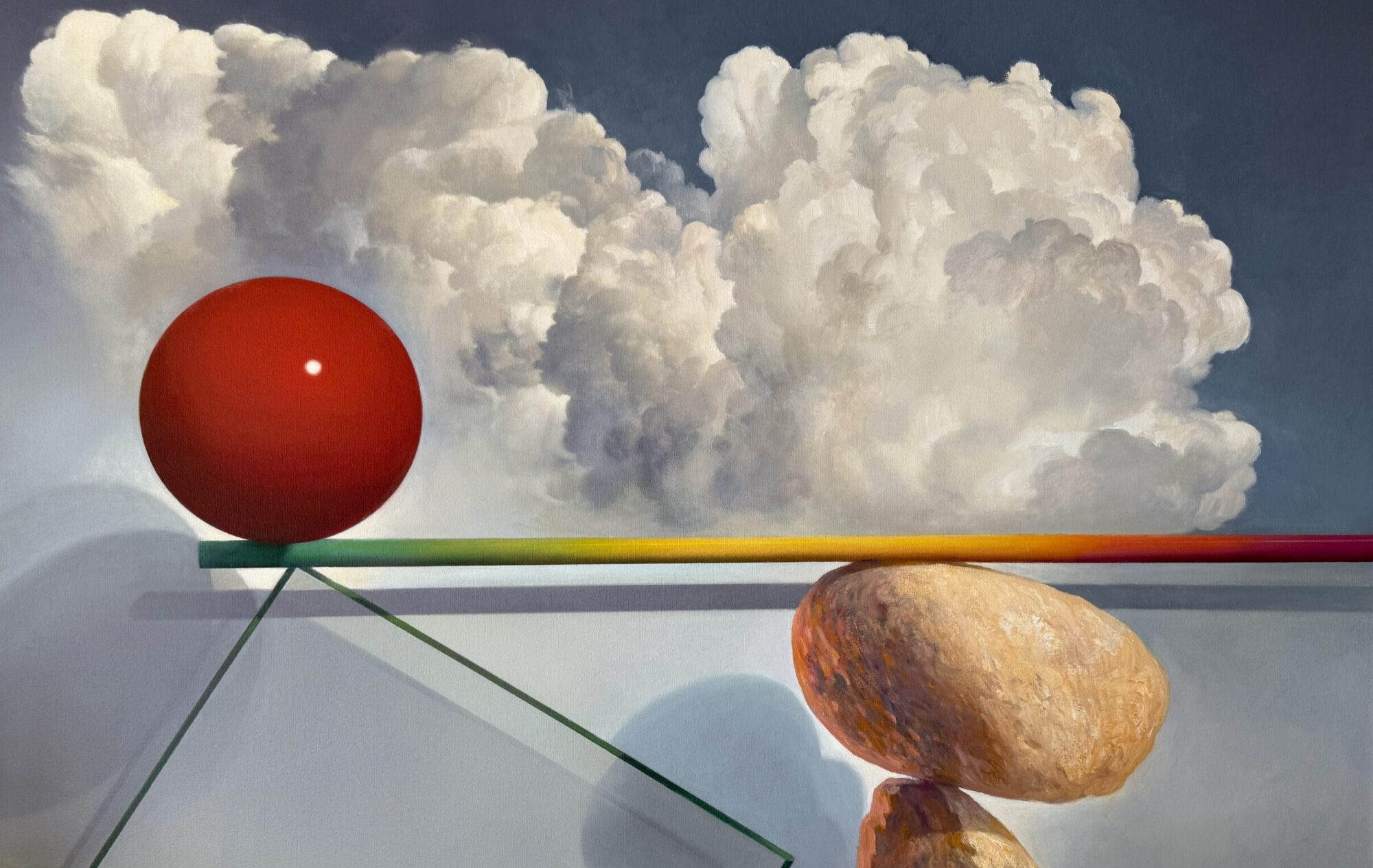
In his works, the concept of balance is often vital; Yasami expertly navigates the line between illusion and reality, creating a sense of tension that captivates the viewer. The use of transparent glass in his compositions can symbolize fragility and vulnerability, prompting the audience to reflect on their own sensory experiences. This element might also create a metaphorical “edge,” where the viewer is pushed to confront their own interpretations of reality and the ephemeral nature of existence.
Through Yasami’s unique vision, he encourages a dialogue about perception and reality, inviting viewers to trust their intuition and engage deeply with the images before them. The balance he achieves in his artwork serves not only as a visual spectacle but also as a poignant reminder of the delicate interplay between what is seen and what is felt.
 

  Fibonacci Art Gallery Tel: (602) 652-8000

Please click images for detail and availability 


Please click images for detail and availability 
Masoud Yasami’s paintings, much like the works of Caravaggio, delve into the exploration of reality through a unique lens that combines intuition and a deep engagement with the natural world. Yasami’s intent seems to be not just to replicate the physical world but to capture the essence of reality through the interplay of light, shadow, and color, creating a compelling illusion that invites viewers to experience a deeper perspective.
Caravaggio is renowned for his use of chiaroscuro, a technique that emphasizes contrast between light and dark, enhancing the three-dimensionality of his subjects and instilling a sense of drama. Similarly, Yasami may utilize light and shadow to create depth and texture, evoking emotions and provoking thought about the nature of existence.
Both artists share a profound connection with their subjects; Caravaggio often depicted biblical scenes with stark realism, while Yasami’s work might reflect broader themes of existence, perception, and the interplay between the seen and unseen aspects of life. 
Artistic Style :   Abstract Illusionism & Magic Realism: 
  • Yasami seamlessly blends hyper-realistic subjects with entirely abstract, geometric environments. He places realistically rendered elements inside unlikely, improbable situations to distort traditional perspectives.  
  • Chiaroscuro and Mastery of Light: 
  • Reminiscent of Baroque master Caravaggio, Yasami uses intense contrast between light and dark to create substantial three-dimensional depth, texture, and dramatic emotional focus. 
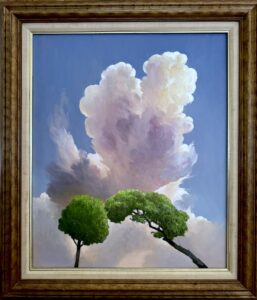
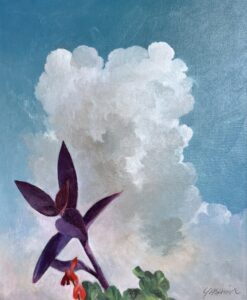
  • Airbrush Precision: The polished surfaces, sharp geometric lines, smooth transitions in the sky, and precise drop-shadows reflect a masterful use of airbrush techniques.
  • Core Themes :  The Illusionism of Balance vs. Chaos: 
  • The central theme revolves around gravitational forces and tension. The artwork depicts an impossible, delicate balancing act where a mallard duck and a house cat stand on thin rods suspended in mid-air. 
  • Perception and Reality: By creating a visual spectacle where spheres, cones, and realistic animals co-exist on a fragile scaffolding, Yasami forces the viewer to confront the boundary between visual illusion and reality.
  • Fragility and Vulnerability: 
  • The thin rods, intersecting planes, and floating shapes suggest an “edge” where harmony is fleeting, prompting a dialogue on the fragile, ephemeral nature of existence.